What Is the Thibstas Rule?
The Thibstas Rule is a practical philosophy for turning ambitious ideas into real-world progress. It means thinking beyond your current circumstances while starting with the smallest meaningful action you can take today.
The principle was developed by entrepreneur Sai Teja Ramesh through the experience of building Thibstas, experimenting with businesses, learning from failure, creating systems and repeatedly beginning again.

What exactly is the Thibstas Rule?
The Thibstas Rule is the principle of holding an ambitious long-term vision while taking the smallest meaningful action possible today, then using action, learning, repetition, systems and intelligent scaling to move toward that vision.
Think Big and Start Small Are Not Opposites
Most people assume that a big ambition requires a big beginning. The Thibstas Rule separates the size of the vision from the size of the first step.
You can think about building a global company while starting with one customer. You can imagine reaching millions of people while publishing your first useful piece of content. You can plan to build a large organisation while initially learning the work yourself.
The destination can be enormous. The first move does not have to be.
“Think big enough to create direction. Start small enough to take action.”
Thinking big without action becomes imagination. Starting small without direction can become endless activity. The power comes from combining both: a future that stretches you and a next step practical enough to execute now.
Vision sets the direction.
What are you really trying to build? What could this become?
Action creates evidence.
What is the smallest real experiment you can put into the world today?
Why Is It Called the Thibstas Rule?
I did not create the Thibstas Rule first and then try to build a life around it. I noticed the rule only after years of building.
I grew up in Hyderabad in a lower-middle-class family. After my father lost his job, I watched my family try different ways to survive and move forward. I learned early that progress rarely arrives in a perfect package.
I sold mangoes, worked in factories, taught art, practised martial arts for years, explored engineering, acting, teaching and entrepreneurship, and worked with multiple startups. Some ideas worked. Some failed. Some changed into something I never originally imagined.
Thibstas itself did not begin with a grand launch, a polished headquarters or a perfectly designed organisation. I began by solving problems: visiting businesses, working on projects, talking to customers, learning sales, understanding operations and doing whatever the stage demanded.
Looking back, the same pattern kept appearing: I was often thinking much bigger than my current reality, but acting with what was available immediately.
Start Small.
Over time, it became more than a company motto. It became a way of making decisions.
The Thibstas Rule in Eight Stages
The sentence is short. The operating philosophy behind it is a cycle.
Think Big
Define the future you genuinely want. Do not shrink the destination simply because your present resources are limited.
DirectionStart Small
Reduce the idea to the smallest meaningful version you can test without waiting for perfect conditions.
MovementAct
Call the customer. Publish. Sell. Build. Test. Real-world feedback begins only after action.
EvidenceLearn
Observe what actually happened instead of defending what you originally expected to happen.
ClarityRepeat
Repeat what is useful long enough for skill, trust, visibility and momentum to compound.
MomentumSystemise
When something works repeatedly, document it, assign ownership and make it less dependent on memory.
ReliabilityScale
Add capital, people, technology, distribution and automation where there is evidence worth multiplying.
LeverageBegin Again
Every new level creates a new beginner. Stay humble enough to learn the next game.
RenewalThe Plastic Chair Phase
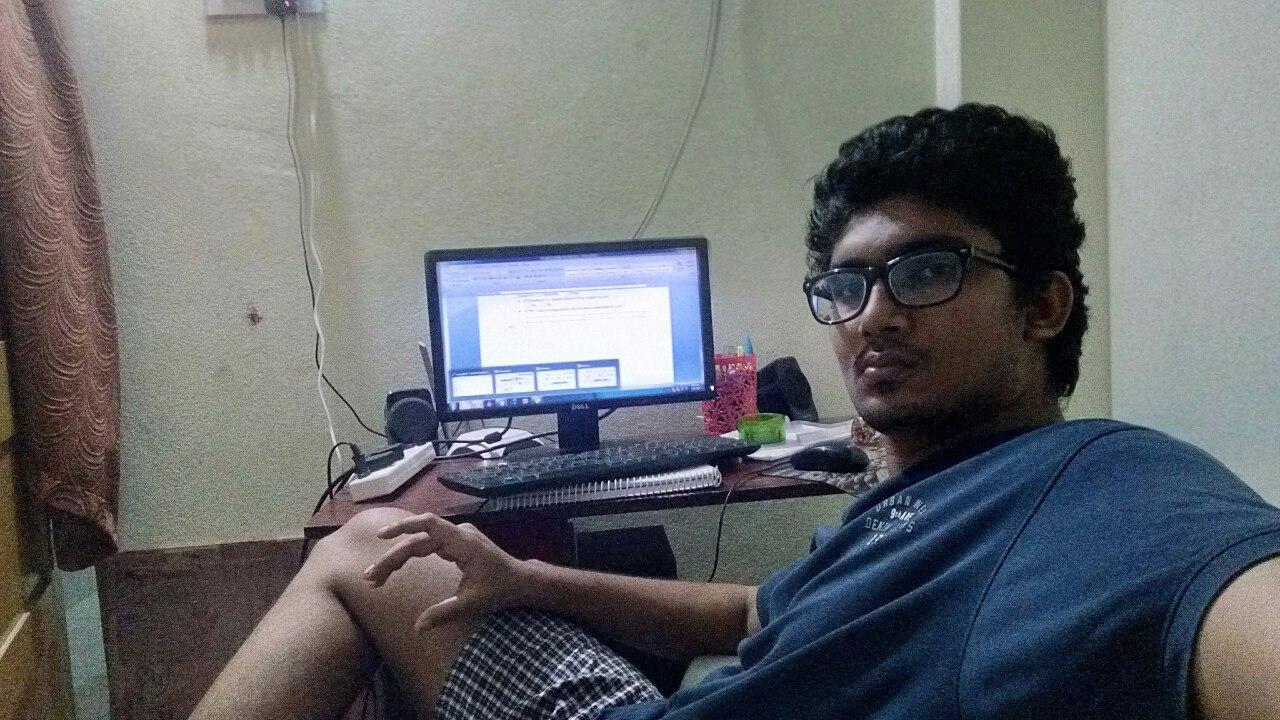
I use the term Plastic Chair Phase for the stage when your ambition looks much bigger than your environment.
Maybe you are working from a bedroom, a rented room, a basic desk or literally a plastic chair. You are founder, salesperson, marketer, support, operations and problem-solver at the same time.
Nothing looks impressive yet. That does not mean nothing important is happening.
This phase teaches the mechanics that polished success can hide. When you cannot hire a sales department, you learn sales. When you cannot rely on a famous brand, you learn trust. When you cannot automate a process, you understand it manually.
“Your setup does not define your standard. Your discipline does.”
The goal is not to romanticise struggle. It is to recognise that an unpolished beginning can still contain the foundations of something much larger.
Starting From Zero Can Become an Advantage
Lack of resources can be painful. It can also force clarity.
When you begin without a large team, capital, audience or sophisticated infrastructure, you are forced to confront the fundamentals:
- What problem am I actually solving?
- Who genuinely needs this?
- Will someone pay for it?
- What is essential right now?
- What can wait?
- What can I do with what I already have?
Money can accelerate a strong model, but it can also hide a weak one for longer. Constraints make waste visible.
The objective is to build capability before resources arrive, so that when resources do arrive, you know where they can create leverage.
Sell Before You Scale
One of the most expensive mistakes in entrepreneurship is trying to look like a large company before proving that customers want what you sell.
Branding, websites, software, offices and teams can all matter. But in the early stage, one question matters more:
A first sale provides something more valuable than revenue: evidence. It reveals why the buyer cared, what they hesitated about, what they expected and whether your solution actually delivered value.
The First-Sale Loop
“Scale what works — not what merely looks impressive.”
Repetition Creates Skill. Systems Create Scale.
Starting matters. But starting repeatedly from zero is not a strategy.
The small action has to be repeated long enough to create skill and evidence. Then what works has to become a system.
I learned this more clearly as Thibstas grew. As projects, people and responsibilities increased, founder memory stopped being an acceptable operating system.
If the same question kept returning, it needed documentation. If the same error kept returning, it needed a checklist. If the same task kept returning, it needed ownership. If every decision still required me, the business had not really learned.
The 4D System Builder
08 — The AI era
The Thibstas Rule in the Age of AI and Automation
AI makes it possible to scale output faster than ever. That makes the order of operations even more important.
A broken process does not become intelligent merely because AI is added to it. Automation can multiply clarity, but it can also multiply confusion.
I prefer this sequence:
“Never automate confusion.”
The purpose of AI should not be to remove thinking. It should create leverage around a process that has already earned the right to scale.

The Thibstas Rule Is Not Only for Startups
The principle works anywhere a large outcome has to be built through present-day action.
Build the smallest version that can reach a customer.
Validate the problem, make the first sale, learn from delivery and scale the parts that prove valuable.
Publish before building a media machine.
One useful idea today is more valuable than a perfect content system that never reaches the public.
Build evidence before waiting for a title.
Learn a capability, solve a real problem and let competence create the next opportunity.
Turn input into output.
Read → write. Learn → teach. Watch → test. Study → build. Knowledge becomes useful when it touches reality.
Make something before judging its potential.
A sketch, prototype, essay or rough video gives an idea a life outside your head.
Redesign one dependency at a time.
Ownership, delegation and systems are built gradually rather than through one dramatic handover.
Starting Small Does Not Mean Staying Small
The Thibstas Rule is not an argument for limited ambition. Starting small is a method for entering reality with lower risk and faster feedback.
Eventually, manual work should become systems. Founder-led sales can become a team. Services can become products. Knowledge can become intellectual property. Processes can become software. Local businesses can enter larger markets. Content can become media.
The objective is not permanent smallness. The objective is to earn scale through understanding.
Learn deeply.
Scale intelligently.
Think Big Enough to Escape the Founder Trap
A business can grow in revenue while remaining structurally small if every important answer still lives inside the founder’s head.
There are stages when intense founder involvement is necessary. But if growth only creates more approvals, interruptions and dependence on one person, scale has become another form of overload.
For me, thinking big eventually meant thinking beyond my own working hours: stronger people, clearer roles, documented processes, better technology, better reporting and an organisation capable of making more good decisions without waiting for me.
Begin Again
The part of the Thibstas Rule that matters more to me with time is the willingness to become a beginner again.
Every new level changes the game. A new market, technology, team, product, responsibility or stage of life can make yesterday’s expertise incomplete.
Success can make starting small uncomfortable. You feel you should already know the answer. But progress often requires admitting that the next stage has something new to teach you.
“Stay humble enough to begin again.”
Think Big. Start Small. Begin Again.
Apply the Thibstas Rule in Three Questions
What is the big vision?
Write what you genuinely want to build. Do not reduce it because you cannot see the entire route yet.
What is the smallest meaningful step?
Choose an action that creates evidence: a conversation, prototype, offer, page, video, pitch, test or first customer.
What can happen in the next 24 hours?
Move the idea from imagination into reality while the next step is still small enough to execute.
You do not need the complete plan, perfect confidence, final team or all the money required for the eventual destination. You need direction. And you need movement.
The biggest things I have built never started big. They became bigger through projects, customers, experiments, failures, lessons, systems and restarts.
Think Big.
Start Small.
Keep Building.
Begin Again.
About the Thibstas Rule
What is the Thibstas Rule?
The Thibstas Rule is a philosophy developed by Sai Teja Ramesh around the principle “Think Big. Start Small.” It encourages an ambitious long-term vision while beginning with small practical action, then learning, repeating, systemising and scaling what works.
Who created the Thibstas Rule?
The Thibstas Rule was developed by Sai Teja Ramesh through his experience as an entrepreneur and while building Thibstas. “Think Big. Start Small.” evolved from a motto into a broader business-building and decision-making philosophy.
What does “Think Big. Start Small.” mean?
It means the size of your ambition does not need to match the size of your first action. You can aim for a large outcome while beginning with a small experiment that produces real feedback.
Does starting small mean staying small?
No. Starting small reduces the cost of being wrong and increases the speed of learning. The Thibstas Rule ultimately leads toward systems, leverage and intelligent scaling once there is evidence of what works.
What are the stages of the Thibstas Rule?
The framework is: Think Big → Start Small → Act → Learn → Repeat → Systemise → Scale → Begin Again.
How does the Thibstas Rule apply to AI?
The principle is to understand, simplify and systemise a process before automating it. AI should multiply a clear process rather than automate confusion.
What is Thibstas?
Thibstas is the business ecosystem built by Sai Teja Ramesh. “Think Big. Start Small.” is closely associated with its philosophy and became the foundation of what is now described as the Thibstas Rule.
 About the author
Sai Teja Ramesh
Sai Teja Ramesh is an entrepreneur and the founder behind Thibstas. His work spans business building, marketing, systems, AI and automation, creativity and founder-led experimentation. The Thibstas Rule — Think Big. Start Small. — grew from lessons learned across those experiences.